

Table of Contents
EV Connect charging Station
Electric vehicles function today as an intelligent, eco-friendly option that works excellently for urban travels together with extended cross-country journeys. Most new EV owners remain confused about the locations where they can recharge their electric vehicle. This guide teaches you the necessary information you need to master EV charging techniques without experiencing stress.
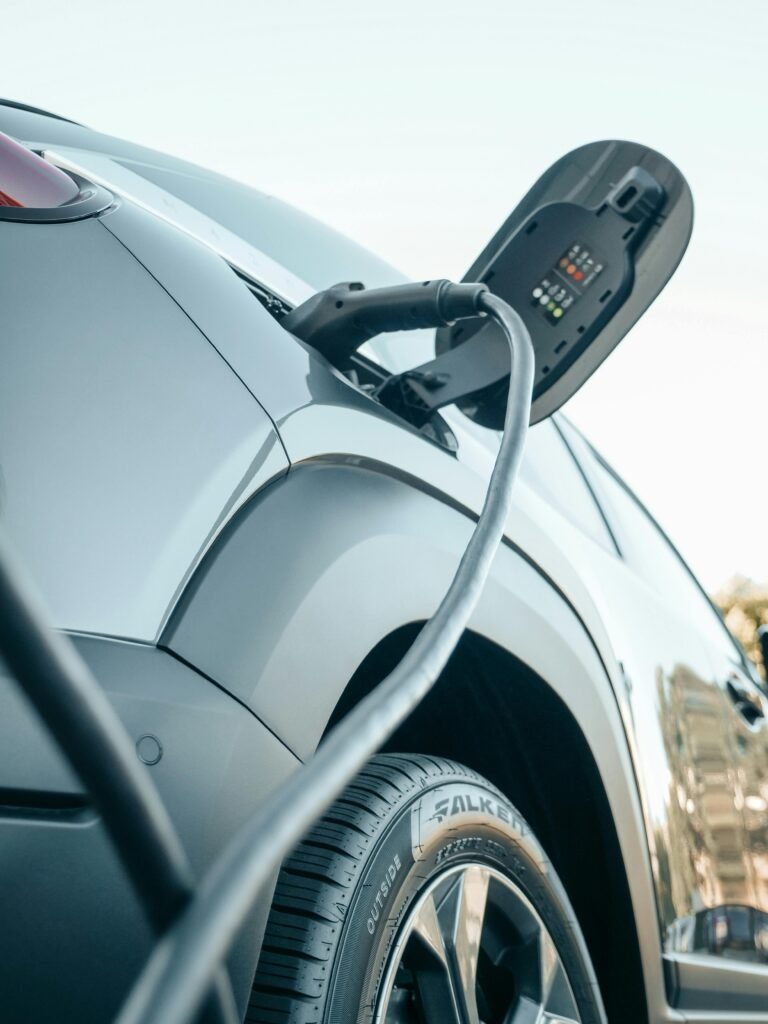
Understanding the EV Charging Process
EV charging processes when your electric vehicle attaches to an electrical power supply to restore its battery power. The time it takes to charge your vehicle depends both on the chosen charger and your charging location.
EV charging occurs through three principal charging levels:
- You can charge your EV overnight at home using the basic 120V connection system, which operates at Level 1. Charging with a fixed 240 V outlet provides car owners around 4–5 miles of additional travel distance every hour.
- The 240V outlet functions like a dryer requires for charging and appears in domestic and public charging stations. Adds 12–80 miles per hour.
- The Level 3 DC Fast Charging solution provides commercial locations with up to 80% battery recharge within thirty minutes.
Where Can You Charge Your EV?
People can now easily access EV charging stations. Here are the main options:
Home Charging
Daily EV operation mainly happens at home charging stations for the majority of owners. To enjoy vehicle charging, you need only install a specific Level 2 charging station at your garage or outside your driveway. Charging your vehicle at night during off-peak hours makes it very practical because of how convenient this process is.
Public Charging Stations
Urban areas host public charging stations, which are also available in highway locations and commercial zones. The public charging infrastructure exists in parking garages combined with grocery stores as well as shopping malls and service centers. Through PlugShare, ChargePoint, and Electrify America applications, users can easily discover nearby stations, confirm their availability, and fulfill payment methods utilizing their mobile devices.
Workplace Charging
Workers can now access EV charging facilities at the workplace through free or discounted fees from different businesses. This feature serves as a major advantage that enables drivers to decrease their use of public charging stations and enhance their travel distance.
Hotel & Retail Charging
Hotels, along with restaurants and retailers, install chargers in order to appeal to EV-driving customers. Check if your hotel includes EV charging services since this becomes essential for extended hotel stays.
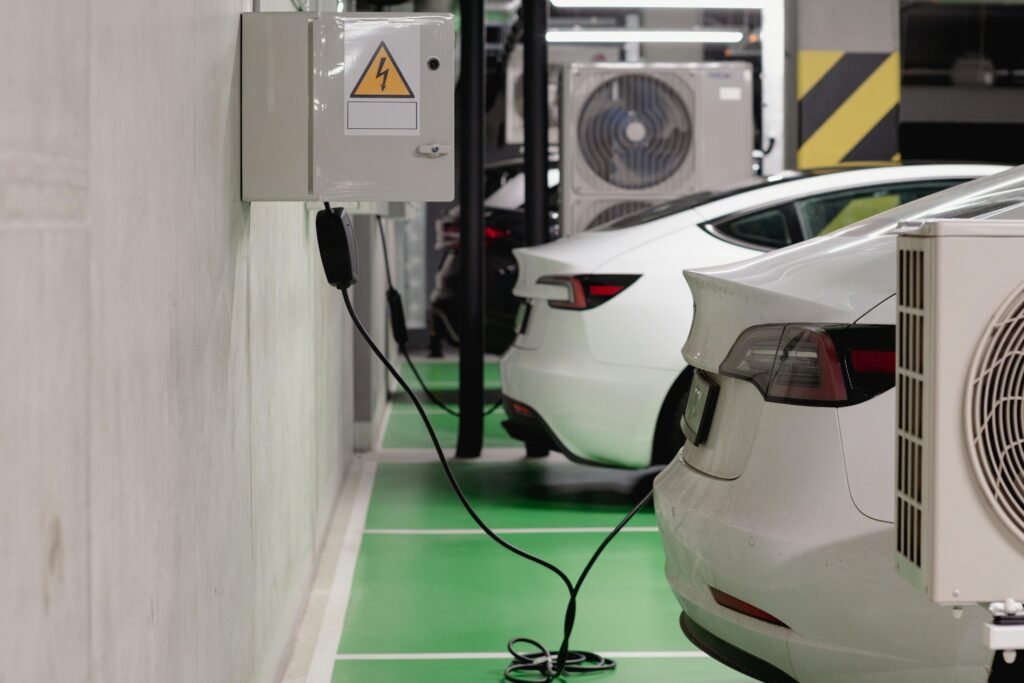
How to Use a Public Charging Station
- You will find it simple to operate public charging stations despite any initial feeling of intimidation.
- Use your EV’s navigation system or mobile app to find a charging location.
- Ensure you check that the charging station can work with your specific vehicle plug, which includes CCS, CHAdeMO, and Tesla types.
- You need to either activate the station through card swiping or application use before your vehicle can start charging.
- Real-time charging progress becomes visible through most apps, as they will alert you upon task completion.
- Please disconnect the charger after your vehicle reaches a full state of charge to allow another person access to the charging spot.
Cost of Charging Your EV
The expenses for charging your vehicle fluctuate based on your location together with the selection of service provider. Here’s a quick breakdown:
Home charging: You will spend $5 to $15 for a full charge when using home charging equipment that costs between $0.10 and $0.20 per kWh.
Level 2 public stations: provide their services without noticeable fees or maintain affordable rates for users.
DC Fast Charging: More expensive, averaging $0.25–$0.60 per kWh. Ideal for fast top-ups on long trips.
The charging fees per session differ between networks since some operate using a per-minute model and others use kilowatt-hour billing. Subscription plans generally provide discounted charging rates to customers.
Top EV Charging Networks
Several charging infrastructure operators have expanded their charging stations throughout North America into extensive networks.
Tesla Superchargers Exclusive to Tesla owners, with ultra-fast charging speeds.
ChargePoint offers both residential and public stations with a vast footprint.
Electrify America manages a rapidly expanding network with features that support CCS and CHAdeMO connectivity systems.
EVgo is known for fast urban charging stations.
Blink Charging dominates the commercial sector and provides charging solutions to hotel properties as well.
These companies implement separate mobile applications and membership structures and cost systems.
Best Apps for EV Charging
Using mobile apps streamlines the charging experience. Top-rated apps include
PlugShare: Maps and reviews of all charging stations, including user feedback.
ChargeHub helps plan long trips with charging stops.
A Better Routeplanner (ABRP): Ideal for route optimization.
Tesla App: For managing Supercharger sessions and vehicle settings (Tesla only).
These apps often include filters for charger type, availability, pricing, and more.

Conclusion
Whether you’re at home, at work, or on the go, finding and using EV charging stations has become easier than ever. As the infrastructure continues to grow, EV ownership becomes more convenient, cost-effective, and eco-friendly. Keep this guide handy, and you’ll be ready to charge smarter, not harder.